Wednesday, 4 May 2011


Tuesday, 3 May 2011
Obituary: Ernest "Shololo" Mothle
 |
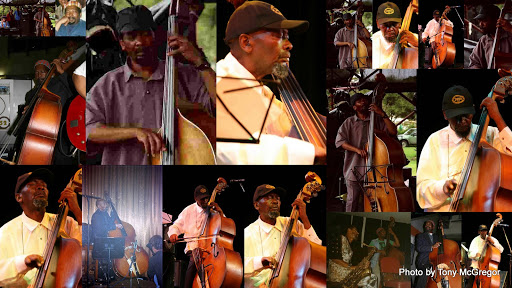
| Ernie playing at a gig in memory of Winston Mankunku Ngozi in Novemer 2009. |
Ernest Mothle was born on 2 December 1941 in Lady Selborne, Tshwane where he attended school, listening to the music that was happening all around him in that bustling township.
After briefly dreaming of playing the clarinet or the sax, he took up the bass and began playing with various musicians active in the Tshwane area.
By 1962 he was an accomplished jazz musician performing with the likes of Alf Herbert's African Jazz and Variety; Early Mabuza's Big Five with Barney Rachabane, Johnny Mekoa, Tete Mbambisa and Pat Matshikiza, the late great sax player Winston Mankunku Ngozi, and singers like Abigail Khubeka, Thandi Klaasen and Busi Mhlongo.
In 1970 he was involved in recording the great album Armitage Road with the Heshoo Beshoo group. He also co-wrote music for the musical Phiri and for the first film version of Athol Fugard's Boesman and Lena.
Mr Mothle then left for the United Kingdom where he joined the many other exiled South African musicians like Mongezi Feza, Dudu Pukwana, Julian Bahula and many others, eventually joining Chris McGregor's Brotherhood of Breath big band with which he toured Europe.
While in the UK Mr Mothle also played with a number of other jazz greats like Errol Clark, Sonny Stitt, Archie Shepp and he toured with blues shouter Jimmy Witherspoon, sax men Courtney Pine and Trevor Watts and the band Spirit Level.
Mr Mothle participated in a BBC TV recording of music for children. He played with the band of Alton Khumalo's Themba Theatre Company when they toured Britain. He was also a member of the orchestra for the Bill Luther Dance Company (Luther was a student of Martha Graham)
 |
| Ernest in front of the nursing home in the former Lady Selborne township in which he was born. |
On his return to South Africa in 1991 Mr Mothle played with visiting musicians Rene McLean, Jon Yon Yen, James Newton, Bob Mintzer and Jasper van't Hof.
He worked as a bass instructor at the Mmabana Cultural Centre and tutored at the Tshwane University of Technology's Music Department.
He has an impressive list of recordings bearing his name as sideman – with musicians as varied as Robert Wyatt, Mike Oldfield (Mr Mothle played percussion on Oldfield's album Ommadawn), George Lee and Mike Osborne.
He played on the soundtrack of David Attenborough's movie Cry Freedom with Jonas Gwangwa and appeared at the first Nelson Mandela birthday concert at Wembly Stadium with Hugh Masekela.
Ernest died of diabetes-related complications on 2 May 2011 at his home in Mamelodi, Pretoria.


Thursday, 29 July 2010
Obituary: Harry Beckett; a doyen of Jazz trumpet and flugelhorn.
Obituary: Harry Beckett; a doyen of Jazz trumpet and flugelhorn.
This is a great tribute to Harry Beckett, the only musician besides Chris to have been in all the formations of the Brotherhood of Breath. He was a great man and a superlative musician whose musicality and dedication will be greatly missed.
This is a great tribute to Harry Beckett, the only musician besides Chris to have been in all the formations of the Brotherhood of Breath. He was a great man and a superlative musician whose musicality and dedication will be greatly missed.
Friday, 4 June 2010
The day the piano went silent
 |
| The silent piano. Chris's beloved Bosendorfer at the Moulin in May 1990 |
Musician and visionary
(This was written on 26 May 2010)Exactly 20 years ago today my brother, jazz pianist, composer, band leader, arranger, and visionary, left us after a painful struggle with cancer. He was older than me by almost exactly seven years. His name was Chris McGregor and he and his musicians between them put out some of the most amazing jazz, in trio, small group, and big band formats.
Chris was much more than a musician, though. He really was a visionary. Even the name of his big band, the Brotherhood of Breath, spoke about his vision. He was passionately committed to freedom, not only in the music, but in his home country of South Africa, which he left with his small group, the Blue Notes, in 1964, when apartheid was tightening its grip on the bodies and minds of the people.
Facing his death

“Chris McGregor looks more hippy sage than African. A tall, stocky, cheerful man with humorous eyes and a ready smile, his most distinctive features are a long grey beard and even longer grey hair worn in a ponytail that hangs all the way down to his ample waist. But African he is.”
Chris's widow, Maxine, wrote a book of her life with Chris. This was published in the US by Bamberger Books of Flint, Michigan, in 1995, and was called Chris McGregor and the Brotherhood of Breath, and subtitled “My Life with a South African Jazz Pioneer.”
Maxine wrote of Chris's philosophy of life:
“Because he was able to really accept life in its entirety, to accept all that came his way, to let go and not set such store on results (a philosophy of 'Whatever happens is the story'), Chris was able to take his life – and death – with a lightness, an expansiveness and a sense of humour that led to peace.”
And she wrote of her own experience of Chris's death:
“Certainly facing his death with him – because he seemed so much like a prolongation of myself – was identical to facing my own death, something that I had always avoided doing even with the deaths of my parents. It was an indescribable experience that has made me fear death no longer – Chris was making jokes ten minutes before he died – and gave me the courage not to hold myself back from life. For if you no longer fear death what is there to fear?”
The day he died

The 26th May 1990 was also our father's birthday and so that morning we were getting ready to celebrate with him before flying out that evening when the call came from Maxine to say that Chris had just left us. To say we were shattered would be a vast understatement. I had spoken to Chris just a few evenings before and he had said, in his usual funny way, “I've been to the angels and they told me they weren't ready for me yet.”
In the interview with Lock Chris spoke of his inspiration, what kept him going: “I guess you have to approach it with your instincts, just grab hold of whatever's coming and follow it through.
“Really, that's all. That is a musician's work. It's a great life, too. I wouldn't edit my story at all. When I think back there's nothing I regret, nothing that seems to me to have been wrong or off-key.
“You have to be 50 years old to realise, though. That's maybe something there is to regret, that we get too soon old and too late smart.”
 |
| Hazel Miller, Chris and Maxine at the Moulin |
And I was grateful to have known him, to have called him, in blood and in spirit, my brother.
This little poem is by way of my tribute to him, my remembrance of his African-ness, so it is writtne somewhat in the style of a traditional Xhosa praise poem and using, in typical call and response style, two little phrases from two Xhosa songs, Thula Sana (Sleep my Child) and Thula Sizwe (Be still, My People).
The day the piano went silent
The day the piano went silent
thula sana
the day the piano stopped singing
thula sana
the day your fingers stopped dancing
thula sana
that day our hearts went quiet
thula sizwe
Now the piano song is stilled
thula sana
And our hearts are stilled with pain
thula sana
We long to hear that song again
thula sana
The way our ears were filled
thula sizwe
The way our ears were filled
thula sana
With the song of the beating heart
thula sana
But now that heart is stilled
thula sana
The heart that gave us love
thula sizwe
O brother of mine, I miss you so
thula sana
My sister is weeping also
thula sana
Your songs are still in our hearts
thula sana
And their rhythms still mark our paths
thula sizwe
The hills and valleys of our youth
thula sana
Are waiting for the song's rebirth
thula sana
And the wind blowing over the hills
thula sana
Still cries out your name to the earth
thula sizwe.
You left us before we were ready
thula sana
Before we knew how to sing
thula sana
But now in our sadness we sing
thula sana
And the people will join our song
thula sizwe
thula sana
the day the piano stopped singing
thula sana
the day your fingers stopped dancing
thula sana
that day our hearts went quiet
thula sizwe
Now the piano song is stilled
thula sana
And our hearts are stilled with pain
thula sana
We long to hear that song again
thula sana
The way our ears were filled
thula sizwe
The way our ears were filled
thula sana
With the song of the beating heart
thula sana
But now that heart is stilled
thula sana
The heart that gave us love
thula sizwe
O brother of mine, I miss you so
thula sana
My sister is weeping also
thula sana
Your songs are still in our hearts
thula sana
And their rhythms still mark our paths
thula sizwe
The hills and valleys of our youth
thula sana
Are waiting for the song's rebirth
thula sana
And the wind blowing over the hills
thula sana
Still cries out your name to the earth
thula sizwe.
You left us before we were ready
thula sana
Before we knew how to sing
thula sana
But now in our sadness we sing
thula sana
And the people will join our song
thula sizwe
Copyright Notice
The text and all images on this page, unless otherwise indicated, are by Tony McGregor
who hereby asserts his copyright on the material. Should you wish to
use any of the text or images feel free to do so with proper attribution
and, if possible, a link back to this page. Thank you.
© Tony McGregor 2010
© Tony McGregor 2010
Saturday, 10 April 2010
The Blues – the Bedrock of Jazz

The blues
 as the bedrock and foundation of jazz. The second article in my series on the history of jazz
“The story of the blues is the story of humble, obscure, unassuming men and women.” - from The Blues Guitar by Alan Warner (nd)
Tuesday, 2 March 2010
How did jazz begin? Part one of a history of jazz

South African bassist Ernest Mothle with Rene McClean
How did jazz begin? Part one of a history of jazzJazz was born out of the pain of slavery and the clash between the cultures of West Africa and the Protestant ethos of the Southern states of the United States. This is a first article in a series looking at the history of jazz through an examination of its many genres.
Subscribe to:
Posts (Atom)